
10 Most Famous Buildings on Vienna’s Ringstraße
A Guide by Royal e-Car Tours
Vienna’s Ringstraße is one of the most spectacular boulevards in the world. Stretching 5.3 kilometres around the historic city centre, it was built in the second half of the 19th century on the orders of Emperor Franz Joseph I, who had the old medieval city walls torn down to make way for a grand new avenue. Today, the Ringstraße is a UNESCO World Heritage Site and home to some of Austria’s most iconic architecture.
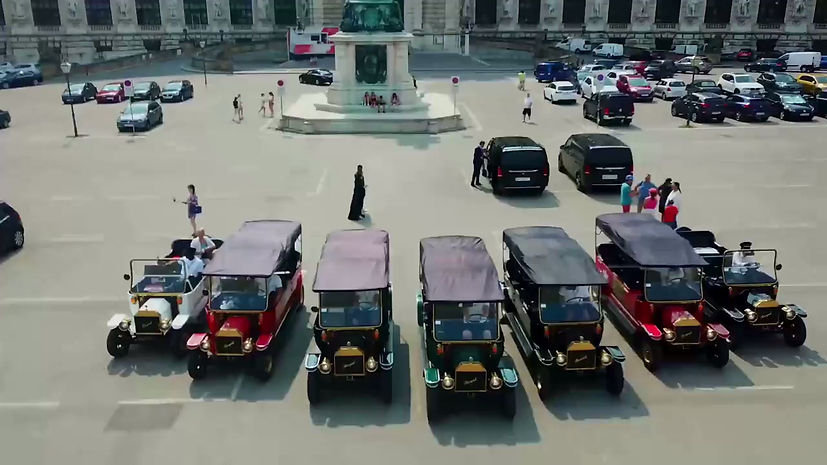
The best way to experience all of these landmarks in one go? A guided tour along the Ringstraße — and Royal e-Car Tours offers a unique, eco-friendly way to discover each one with expert commentary along the way.
Here are the 10 most famous buildings that line this legendary street.
1. Vienna State Opera (Wiener Staatsoper)

The Vienna State Opera is perhaps the most iconic building on the entire Ringstraße. Completed in 1869 in the Neo-Renaissance style, it is considered one of the greatest opera houses in the world. Home to the Vienna Philharmonic Orchestra, it hosts over 350 performances each year. Its grand staircases, ornate interiors, and elaborate decorations are a testament to Vienna’s status as the music capital of the world.
2. Hofburg Imperial Palace
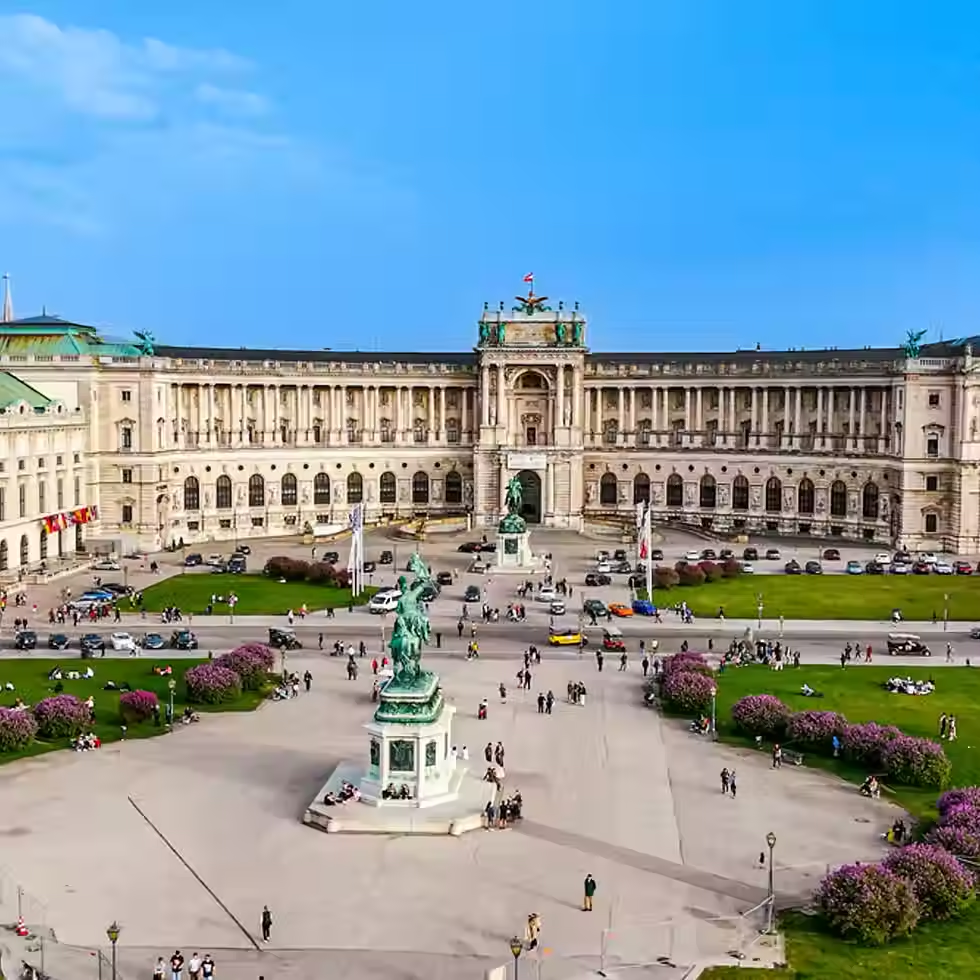
The Hofburg is one of the most magnificent palaces in the world and a true centrepiece of the Ringstraße. Located on Heldenplatz, it was the residence of the Habsburgs for centuries and is now a cultural centre, surrounded by magnificent gardens such as the Burggarten and the Volksgarten. The palace complex is enormous, housing several world-class museums including the Imperial Apartments,
the Sisi Museum, and the Imperial Silver Collection. It stands as the most powerful symbol of Vienna's imperial past and remains one of the most visited attractions in all of Austria.

3. Austrian Parliament Building
Completed in 1883 and designed by architect Theophil von Hansen, the Parliament Building is one of the most striking landmarks on the Ringstraße. Built in the Neo-Classical style, it is inspired by ancient Greek architecture, with impressive columns, statues, and friezes representing the ideals of democracy. In front of the building stands the famous Pallas Athena fountain — a symbol of wisdom and justice.

4. Vienna City Hall (Rathaus)
Built between 1872 and 1883 by architect Friedrich Schmidt, the Rathaus is a masterpiece of Neo-Gothic architecture, complete with towering spires and intricate stonework. It serves as the seat of Vienna’s mayor and city government. Throughout the year, the square in front of the City Hall hosts some of Vienna’s most beloved events, from the famous Christmas market to the open-air film festival in summer.
5. Burgtheater

Standing directly opposite the City Hall, the Burgtheater is one of the most important and prestigious German-language theatres in the world. Built between 1874 and 1888 by Gottfried Semper and Karl von Hasenauer in the Neo-Baroque style, the theatre has a remarkable ceiling painted by a young Gustav Klimt and his collaborators. It remains a cornerstone of Vienna’s rich cultural life.
6. Kunsthistorisches Museum (Art History Museum)

The Kunsthistorisches Museum is one of the grandest museums in the world, both in terms of its architecture and its collections. Built in the Neo-Renaissance style and opened in 1891, it houses an extraordinary collection of art including works by Raphael, Vermeer, and Caravaggio. Its twin building directly across the road is the Natural History Museum — together, they form one of the most impressive architectural pairs in Europe.

7. Naturhistorisches Museum (Natural History Museum)
Identical in design to the Art History Museum and opened the same year, the Natural History Museum is equally stunning from the outside. Inside, it holds one of the world’s most important collections of natural history artefacts, including meteorites, dinosaur fossils, and the famous Venus of Willendorf — a 25,000-year-old prehistoric figurine found in Austria.

8. Votivkirche (Votive Church)
The Votivkirche is one of the most beautiful Neo-Gothic churches in Europe. Construction began in 1856 as an act of gratitude after a failed assassination attempt on Emperor Franz Joseph I, and the church was consecrated in 1879. Its two soaring towers and ornate stone facade dominate the northern section of the Ringstraße and attract thousands of visitors every year.

9. University of Vienna
Founded in 1365, the University of Vienna is one of the oldest universities in Europe. Its magnificent main building on the Ringstraße was designed by Heinrich von Ferstel in the Neo-Renaissance style and completed in 1884. With its grand arcaded courtyard and elegant facade, it is as much an architectural landmark as it is a prestigious centre of learning and research.
10. Museum of Applied Arts (MAK)
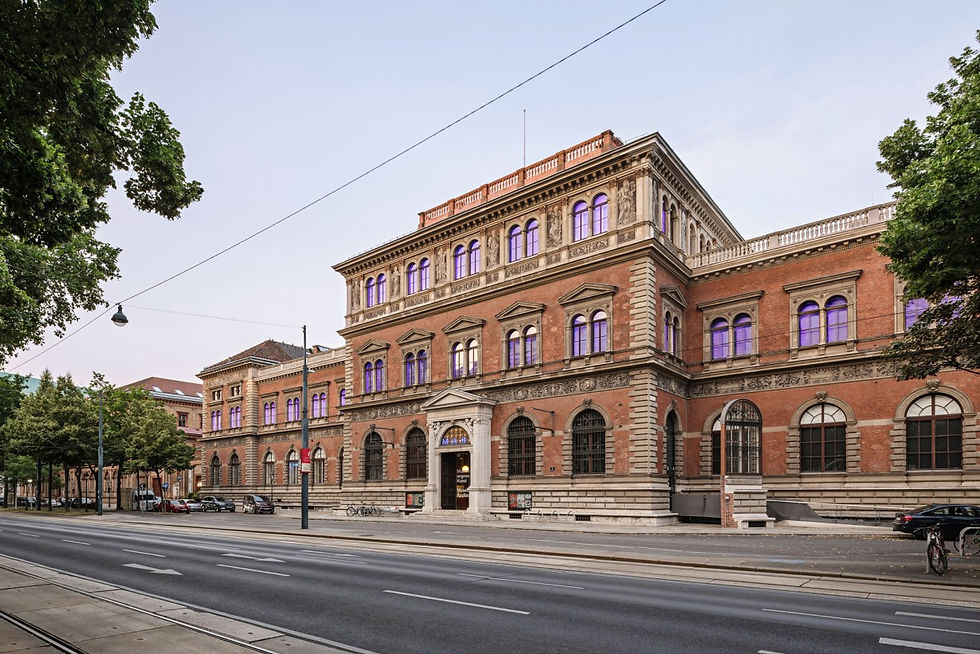
The Museum of Applied Arts, known as the MAK, was the first museum building to be constructed on the Ringstraße. Designed by Heinrich von Ferstel in the Neo-Renaissance style and completed in 1871, it houses a remarkable collection of decorative arts, design, and architecture spanning centuries. The MAK remains one of Vienna’s most important cultural institutions and a hidden gem for visitors exploring the Ringstraße.
Discover the Ringstraße with Royal e-Car Tours

Want to experience all 10 of these magnificent buildings without missing a single detail? Royal e-Car Tours offers guided electric car tours along the Ringstraße, giving you an intimate, eco-friendly, and fascinating way to explore Vienna’s most iconic boulevard. Our expert guides bring the history of each building to life — so you don’t just see Vienna, you truly understand it.



Comments